
Software Development Company Mumbai: The 2026 Guide for Enterprise Leaders
Finding a Software Development Company Mumbai That Understands Global Stakes
Walk into any co-working space in Bandra Kurla Complex on a Tuesday morning, and you will overhear conversations about Kubernetes clusters, PCI‑DSS compliance, and the latest concurrency patterns in Golang. This is not Silicon Valley, and it is certainly not your average IT outsourcing hub. This is Mumbai, and it has quietly evolved into one of the most sophisticated software engineering ecosystems in the world. When business leaders search for a Software Development Company Mumbai, they are no longer looking for a mere coding vendor. They are searching for a strategic partner who can navigate the unique intersection of financial rigor, regulatory complexity, and breakneck market speed that defines this city.
The numbers paint a compelling picture, but they only scratch the surface. Gartner projects India's IT spending to cross $176.3 billion in 2026, with a growth rate that outpaces most major global economies. More importantly, global financial institutions are not just outsourcing to Mumbai; they are actively relocating their most sensitive engineering nerve centres here. JPMorgan Chase is constructing a two‑million‑square‑foot campus in Powai that will eventually house 30,000 employees, making it one of the largest global capability centres in Asia. Deutsche Bank has expanded its Mumbai presence by nearly 20% in the last fiscal year, concentrating on risk analytics and high‑frequency trading system development.
At the 2026 World Economic Forum, the Maharashtra government signed an MoU with Supervity AI to establish the world's first AI Global Capability Center hub right here in BKC.This tectonic shift did not happen by accident. Mumbai offers a rare blend of attributes that no other Indian city can fully replicate: the financial discipline of a global banking centre, a dense concentration of enterprise decision‑makers who demand zero tolerance for downtime, and a talent pool tempered by decades of working on some of the world's most demanding distributed systems.
When a multinational bank chooses a Software Development Company Mumbai for its most critical engineering work, it is not driven by labour arbitrage alone. It is driven by the proven ability of Mumbai's engineers to understand that a millisecond of latency in a trading system can erase millions in value, and that a data breach in a healthcare platform is not just a regulatory penalty but a fundamental betrayal of patient trust.
Therefore, if you are a business leader in Mumbai, whether you are scaling a fintech venture in Andheri East, optimising a logistics network in Navi Mumbai, or driving digital transformation for a century‑old conglomerate in Nariman Point, the question is no longer whether you should invest in custom software. The question is whether you will partner with a Software Development Company Mumbai that genuinely comprehends the stakes of building for this unique ecosystem, or one that treats your project as just another ticket in a high‑volume factory.
Why a Software Development Company in Mumbai Is a Strategic Imperative, Not an Expense
Let us address the elephant in the boardroom. Packaged software is engineered for the median company. Your business is not average. You operate in a jurisdiction where Goods and Services Tax (GST) filing structures shift quarterly, where the Unified Payments Interface (UPI) infrastructure evolves weekly, where competitors are embedding artificial intelligence into their core workflows, and where your customers demand a seamless experience whether they are connected to a 5G network in South Mumbai or a patchy 4G connection in the western suburbs. Off‑the‑shelf solutions cannot keep pace with this velocity, and a generic Software Development Company Mumbai will not either, but a specialist one will.
The Concealed Cost of Licensing and Structural Lock‑In

Most finance directors look at the monthly per‑user subscription fee of a SaaS product and conclude, "That is affordable." Yet over a three‑ to five‑year horizon, those recurring fees accumulate into a sum that could have entirely funded a bespoke platform, a platform you own outright, whose price does not escalate at every renewal, and which you can modify without submitting a feature request to a vendor backlog that may never see the light of day.
I have spoken to CFOs in Mumbai's BFSI sector who are disbursing upwards of ₹80 lakhs annually across a fragmented suite of CRMs, ERPs, and project management tools, and they still have to hire consultants to force these applications to exchange data, because none of them were designed to understand the specific data models of a Mumbai‑based financial institution.
The Integration Quagmire

This leads to the second, more insidious drain on resources: the integration morass. Your business runs on a patchwork of legacy systems, your general ledger, your warehouse management software, your customer support portal, your payment aggregator. Off‑the‑shelf products expose generic APIs, but those interfaces are built for the lowest common denominator. They cannot comprehend your proprietary business rules, your custom workflow automations, or your regulatory reporting hierarchies.
Every integration becomes a brittle, expensive side project that breaks every time one of the vendors updates their API payload. A logistics firm in Mumbai spent eighteen months and nearly ₹2 crores attempting to reconcile their SaaS transportation management system with their legacy inventory database, only to abandon the effort and commission a purpose‑built platform that accomplished both objectives in half the time and at half the total cost of ownership.
That is the difference between hiring a transactional IT shop and a strategic Software Development Company Mumbai that thinks in terms of total lifecycle value.
When Performance Degrades Into a Competitive Disadvantage

This is arguably the most painful scenario. Your website or application is frequently the first, and sometimes the only, interaction a potential customer has with your brand. If it loads sluggishly on a mobile device, if the checkout flow collapses during a festive flash sale, if the executive dashboard takes ten seconds to render a critical P&L report, you are not just losing that particular transaction.
You are permanently eroding that customer's trust. In Mumbai's hyper‑competitive markets, where every sector from BFSI to organised retail is saturated with alternatives, performance is not a luxury; it is your primary differentiator. Off‑the‑shelf platforms are engineered to serve the median user, not your peak traffic. They throttle, they lag, and they fail precisely when you need them to shine. An expert Software Development Company Mumbai builds for the spike, not for the average.
The Anatomy of a High‑Performance Platform and Why Most Mumbai Websites Fall Short

Let us drill into the technical layers, but always with a focus on business outcomes. A modern digital platform is not a static collection of HTML pages. It is a dynamic, stateful application that must render content instantly, adapt fluidly to any screen size, handle secure financial transactions, personalise the user experience, and remain discoverable by search engines, all while complying with stringent data protection legislation.
The Speed‑to‑Revenue Equation
Every 100 milliseconds shaved off your page load time correlates with a 1‑2% uplift in conversion rates. This is not a marketing theory; it has been validated across thousands of e‑commerce and lead‑generation properties. Yet, the average website in India still takes over five seconds to become interactive on a mobile connection. Why? Because they are architected on outdated paradigms: monolithic backends that choke under concurrent requests, heavy client‑side JavaScript bundles that block the main thread, and images that are not optimised for the bandwidth realities of the Indian mobile subscriber.
A modern Next.js application, leveraging a hybrid of server‑side rendering and static generation, can deliver sub‑second page loads even on constrained 3G networks because the HTML is pre‑rendered on the server and streamed to the browser as a complete, paint‑ready document. This means your content appears instantly, and the user can begin reading or interacting while the JavaScript hydrates in the background. A sophisticated Software Development Company Mumbai will insist on this architecture not because it is trendy, but because it directly scales your revenue.
Security Under the Digital Personal Data Protection Act
The Digital Personal Data Protection (DPDP) Act entered its implementation phase in early 2025, fundamentally altering the compliance terrain for any business that processes user data. The statute mandates explicit consent, purpose limitation, data minimisation, and rigorous breach notification protocols. Off‑the‑shelf platforms often treat data as a fungible asset to be mined and shared with third‑party analytics and advertising partners, a practice that now places you squarely in the crosshairs of regulatory action.
With a custom platform architected by a competent Software Development Company Mumbai, you retain granular control over every facet of data flow: storage location, access privileges, retention periods, and encryption standards. You can implement column‑level encryption, immutable audit logs that track every access event, and automated data purging schedules, all embedded in the core architecture from day one, rather than retrofitted as a desperate compliance afterthought.
The Mobile‑First Reality of Mumbai
Over 70% of all internet traffic in India originates on mobile devices. In Mumbai, this share is even higher for consumer‑facing services, yet countless business websites are still designed primarily for desktop, with mobile treated as a degraded second‑class citizen. The result is a frustrating experience of pinching, zooming, and mis‑tapping.
A professionally engineered site today begins with a mobile‑first design philosophy: the layout, typography, touch targets, and navigation hierarchies are all optimised for a six‑inch screen first, then progressively enhanced for larger viewports. This approach not only elevates user experience but aligns with Google's mobile‑first indexing, meaning your mobile site is the primary asset Google uses to rank your pages. A forward‑thinking Website Development Company Mumbai will never compromise on this principle.
How to Evaluate a Software Development Company Mumbai in 2026

Every development firm in Mumbai has a glossy portfolio. But a portfolio reveals almost nothing about how they will handle your specific challenges, your legacy data migrations, your regulatory constraints, your internal team's ability to take over post‑launch, your unexpected traffic surges. I have seen beautiful case studies lead to catastrophic project failures because the team that built those showcase sites was not the team assigned to your engagement, or because they had never encountered the scale or security requirements your industry demands.
1.The Architectural Autopsy
This is the single most reliable diagnostic test. Ask the prospective partner: "Select one of your past projects that mirrors our complexity. If you were to restart that project today, what architectural decisions would you revise?" Pay close attention to the response. A team that has genuinely wrestled with production incidents will offer nuanced, specific opinions, about database sharding strategies, caching invalidation policies, API versioning, or deployment pipeline hardening.
They will candidly discuss trade‑offs: "We chose PostgreSQL for that project, but in hindsight, we should have evaluated CockroachDB for horizontal write scalability, because we underestimated the write throughput." Conversely, a team that delivers a generic platitude like "we always use the latest technology" is signalling that they have not internalised any lessons from their past work, because every authentic project involves mistakes, and the mark of a mature Software Development Company Mumbai is the ability to articulate those lessons transparently.
2. Production‑Readiness as a Default State
Engineering is not merely about authoring code; it is about ensuring that code remains operational and observable at 2 AM on a Sunday during an unforeseen traffic spike.
Inquire about their observability stack: do they instrument their applications with rich metrics, structured logs, and distributed tracing from the very first sprint? How do they execute schema migrations on a live production database without incurring downtime? What is their documented incident response protocol, who receives the page, what does the runbook contain, how do they communicate status to executive stakeholders?
A mature Software Development Company Mumbai will have these answers committed to memory, because they have endured the pain of outages and have systematically engineered processes to prevent recurrences.
3.The Handoff, The Most Overlooked Deliverable
Far too many engagements culminate in a repository of code that technically executes but is functionally a black box for your internal team. No runbooks, no architectural diagrams, no test coverage that your engineers can extend, no idempotent deployment scripts, no environment variable documentation. This oversight is particularly prevalent in Mumbai's high‑volume outsourcing culture, where "delivery" is declared complete the moment the site goes live.
A partner that takes handoff seriously will have a standardised playbook: a comprehensive README, a live API documentation portal (OpenAPI/Swagger), a robust test suite that executes in CI, a staging environment that is a byte‑for‑byte mirror of production, and a series of knowledge‑transfer sessions that teach your team not merely how the system operates, but why it was constructed in that particular manner. They will also ensure the code adheres to consistent linting and formatting rules that align with your internal standards, because they had the foresight to ask about those standards during the discovery phase.
4. Intellectual Property and Governance
It sounds elementary, yet I have reviewed contracts where the vendor retained ownership of the underlying code or employed proprietary frameworks that created a de facto lock‑in for future maintenance. A reputable Software Development Company Mumbai will grant you full, unrestricted ownership of all source code, credentials, and infrastructure configuration from inception.
They will also furnish a software bill of materials, a complete inventory of all open‑source libraries and their respective licences, so you are never surprised by a licensing change. This is not a negotiable point; it is a fundamental hygiene factor.
Critical Warning Signs That Your Current Platform Is Repelling Customers
You may already suspect that your digital presence is underperforming, but you need concrete diagnostic indicators. Here are the red flags that demand immediate intervention.
1. An Organic Bounce Rate Exceeding 50%
Bounce rate is an imperfect metric, but when it is persistently high on your primary landing pages, it typically signifies that visitors are not finding what they anticipated.
The culprit is often slow load times, they abandon the page before it renders, or confusing navigation that obscures the information they seek. In Mumbai's fiercely contested landscape, every lost visitor is a potential customer who will navigate to a competitor.
A well‑architected platform with a clear information hierarchy, sub‑second rendering, and prominently positioned calls‑to‑action can realistically halve that bounce rate within weeks.
2. Steep Drop‑Off at the Checkout or Form Submission Stage
If users are diligently adding items to their cart or filling out lead generation forms but failing to complete the final action, the root cause is almost invariably technical: a sluggish payment gateway handshake, a broken CAPTCHA, an obscure error message that provides no remediation guidance, or a form that behaves erratically on mobile devices.
These are not aesthetic design flaws, they are engineering defects that demand rigorous testing across devices, browsers, and network conditions.
A professional Software Development Company Mumbai will implement automated end‑to‑end tests that simulate realistic user journeys on actual mobile hardware, catching these friction points before they erode your conversion funnel.
3. Invisibility for High‑Intent Local Searches
If you are a BFSI firm in BKC and a search for "financial advisory Mumbai" does not surface your site on the first page, it is not solely an SEO content problem, it is a performance problem. Google's Core Web Vitals, Largest Contentful Paint, First Input Delay, and Cumulative Layout Shift, are now explicit ranking signals.
Sites constructed with heavyweight client‑side frameworks that block rendering will consistently score poorly on these metrics, driving you down the search results. Next.js, with its server‑side rendering capabilities, delivers pages that are paint‑ready and interactive almost instantaneously, directly bolstering your Core Web Vitals and your organic visibility.
4. Any Security Scare, However Minor
A single compromised user account, a phishing campaign that spoofed your domain, or a warning from Google Search Console about malware can irreparably fracture customer trust. In the post‑DPDP regulatory environment, such incidents also trigger mandatory reporting and potential financial penalties.
A secure architecture, enforcing HTTPS everywhere, implementing strict Content Security Policies, configuring rigorous CORS, sanitising all inputs, and performing automated dependency scanning, is non‑negotiable. It must be woven into the development lifecycle, not bolted on during the final week of a rushed project.
The Tangible Business Value of Commissioning a Bespoke Platform
I frequently hear the objection: "Custom development is prohibitively expensive." It is, in the short term. But let us analyse the long‑term arithmetic, because the return on investment often dwarfs the initial outlay by an order of magnitude.
Direct Revenue Lift from Latency Reduction
As established, each 100ms improvement can drive a 1‑2% conversion uplift. If your current site loads in three seconds and we bring it down to 1.5 seconds, you are potentially looking at a 15‑30% increase in conversion rates. For a mid‑sized e‑commerce operation turning over ₹50 crores annually, that translates to ₹7.5‑15 crores in additional top‑line revenue every single year. The development cost is a fraction of that recurring value.
Operational Efficiency and Labour Reallocation
Custom software automates the manual, repetitive processes that consume your team's productive hours. I worked with a logistics company in Mumbai that employed a team of twenty individuals solely to reconcile shipment data across three disconnected systems, a task that consumed four hours daily and was riddled with spreadsheet errors.
We built a real‑time integration fabric that automated the reconciliation, reduced error rates to near zero, and liberated those twenty employees to focus on customer service and route optimisation. The annual labour savings alone exceeded ₹1.2 crores, and the platform paid for itself within six months.
Customer Retention Through Superior Experience
In Mumbai's service‑oriented economy, retention is the lifeblood of sustainable growth. A seamless, swift, and secure digital experience builds loyalty organically. When your customers can check their policy status, execute a payment, or raise a support ticket in under sixty seconds, they are far less likely to defect to a competitor. Over a five‑year customer lifetime, that incremental retention can be worth millions in gross margin.
Agility to Respond to Regulatory and Market Shifts
The most underrated benefit of bespoke software is organisational agility. When the government introduces a GST revision or the NPCI releases a new UPI version, you can adapt your platform within days, sometimes hours.
With off‑the‑shelf software, you are shackled to the vendor's roadmap, which may take months or may never materialize. In Mumbai's fast‑moving business environment, that agility is not a luxury; it is a survival trait, and it is precisely what a top‑tier Software Development Company Mumbai delivers.
A Development Process Engineered for Mumbai's Business Reality
Every firm claims to follow a process, but the distinction lies in the execution details. Here is the methodology we have refined across hundreds of engagements, tailored specifically for the Mumbai context, where stakeholders are perpetually time‑constrained, regulations evolve unpredictably, and timelines are invariably ambitious.
Why Our Technology Stack Defines a Modern Software Development Company Mumbai
We are not a generalist shop. We specialise in a lean, powerful stack because we believe these technologies deliver the optimal outcomes for enterprise‑grade applications in Mumbai's demanding environment.
Frontend: Next.js with TypeScript
Next.js is the most mature React framework for production deployment. It affords us the flexibility to choose between server‑side rendering, static generation, and client‑side rendering on a per‑page basis. This means we can serve marketing pages as static HTML for maximum speed, while rendering dashboards dynamically on the server to reflect real‑time data.
The incremental static regeneration (ISR) feature enables us to update static content without a full rebuild, a critical capability for content‑heavy sites that change frequently.TypeScript is non‑negotiable. It catches type mismatches at compile time, drastically reducing the runtime errors that plague large JavaScript codebases. For a Mumbai business that needs to iterate rapidly without breaking existing features, TypeScript provides the safety net that permits confident refactoring. It also makes the code self‑documenting, easing knowledge transfer to your team.
Backend: Node.js, NestJS, and Golang
Each of these technologies has a specific sweet spot.Node.js is our workhorse for most APIs and real‑time services. Its non‑blocking event loop efficiently handles thousands of concurrent connections, and its vast ecosystem accelerates development. We choose it for applications where rapid iteration and a unified JavaScript/TypeScript stack across frontend and backend are valuable.NestJS is a framework that imposes structure on Node.js. It enforces a modular architecture, dependency injection, and testability, essentially, the proven design patterns of Angular applied to the backend.
We select NestJS for larger, more complex projects where multiple teams will collaborate, because it provides a clear, consistent structure that reduces cognitive load and maintenance overhead.Golang is our choice for performance‑critical services: high‑frequency trading engines, real‑time streaming analytics, and any service that must handle thousands of requests per second with minimal latency. Go's lightweight goroutines and excellent concurrency primitives allow us to extract maximum performance from every server, which is crucial in cost‑sensitive environments.
We also use Go for infrastructure tooling and CLI utilities, because it compiles to a single, statically linked binary that is straightforward to deploy.This stack is not selected for hype; it is chosen because we have benchmarked it against alternatives and found it to offer the optimal balance of developer productivity, runtime performance, and operational simplicity for the systems Mumbai businesses need.
A Practical Guide to Software Development Pricing in Mumbai
Pricing is the most frequent question, and it is also the most misunderstood. I cannot give you a fixed number because every project is distinct, but I can offer a framework to understand the cost drivers, so you can evaluate proposals with clarity and confidence.
The Factors That Determine Investment
Research and Discovery – The more we understand your business, your users, and your legacy systems, the better we can architect the solution. This phase can range from a few days for a simple project to several weeks for a complex enterprise system. It is an investment that pays dividends by reducing rework and ensuring we build the right solution.
Design Complexity – A standard template‑based design is quicker and cheaper, but it will not differentiate your brand. Custom UI/UX, complete with design systems, animations, and micro‑interactions, demands more time and expertise. The cost scales with the number of unique screens, the complexity of user flows, and the level of visual polish.
Development Scope – This is the largest variable. It is driven by the number of features, the intricacy of business logic, the number of third‑party integrations, and the degree of customisation required. Each integration, whether it is a payment gateway, a CRM, an ERP, or a government API, adds development and testing effort. Similarly, custom algorithms (e.g., dynamic pricing, route optimisation, fraud detection) require specialised engineering.
Technology Choices – While our core stack is standard, some projects may require specific complementary technologies, for instance, a machine learning component might necessitate Python, or a mobile app might need React Native. These choices can affect resource availability and cost, though our core specialists in Next.js, TypeScript, Node.js, NestJS, and Golang are already highly efficient.
Testing and Quality Assurance – Comprehensive testing, unit, integration, end‑to‑end, performance, and security, is not optional, but the depth of testing depends on the project's risk profile. A fintech application handling payments will have more rigorous security and load testing than a content marketing site. We always advocate for a thorough testing strategy because it is cheaper to catch bugs before launch than to fix them in production.
Timeline – If you need a platform in three months instead of six, we will need to allocate more resources in parallel, which increases the cost. However, we never compromise quality for speed, we accelerate by adding more engineers to the team, not by cutting corners.
Post‑Launch Support – The project does not conclude at launch. We offer support packages that include monitoring, bug fixes, minor enhancements, and security updates. These are typically structured as a monthly retainer, and the cost depends on the expected volume of changes and the level of service (e.g., business hours versus 24/7 coverage).
Indicative Investment Bands
To provide a ballpark, here are typical ranges based on our extensive experience in Mumbai:
Simple Projects (landing pages, brochure sites, basic CMS): ₹2 lakhs to ₹5 lakhs. These are usually completed in 4‑6 weeks and require minimal custom functionality.
Medium‑Complexity Projects (custom web applications with user accounts, payment integration, moderate business logic): ₹5 lakhs to ₹20 lakhs. These take 8‑16 weeks and involve multiple integrations and a more thorough design and testing phase.
Enterprise‑Grade Platforms (high‑traffic BFSI systems, logistics platforms, SaaS products with multi‑tenancy, complex analytics): ₹20 lakhs and above. These projects span several months and involve a dedicated team of designers, frontend and backend engineers, QA specialists, and a project manager. They also include extensive documentation and a meticulous handoff.Remember, these are indicative figures.
We never provide a final quote without a proper discovery phase, because we refuse to build a product that fails to meet your needs simply to fit a predetermined budget. We will work with you to prioritise features and phase the development so you receive a functional product early, with enhancements delivered in subsequent phases as budget permits.
Industries We Serve Across Mumbai's Diverse Economy
Mumbai's economic fabric is a tapestry of distinct sectors, each with its own software requirements. Our experience spans most of them, and we approach each with a deep appreciation of its unique regulatory, operational, and competitive dynamics.
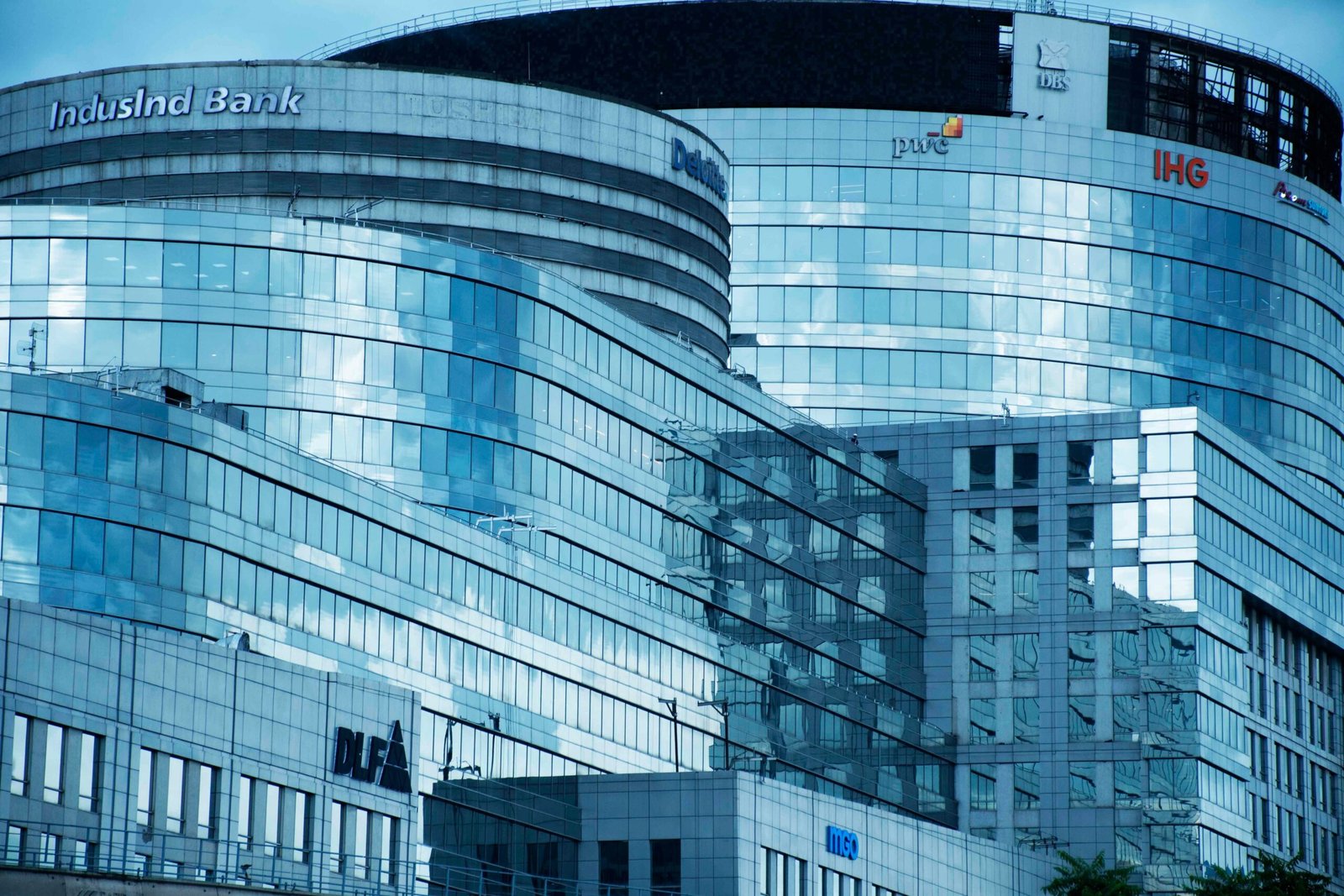
Banking, Financial Services, and Insurance (BFSI)
This is Mumbai's traditional heartland. We collaborate with banks, NBFCs, insurance providers, and asset managers to construct trading platforms, risk analytics dashboards, customer onboarding systems, and compliance reporting engines. The overriding challenges here are security and latency, you cannot tolerate a data leak, and you cannot afford a delayed trade execution.
We use Golang for high‑throughput microservices, NestJS for modular maintainable APIs, and Next.js for secure, responsive customer portals. We also implement stringent audit trails and fine‑grained role‑based access controls to meet RBI and SEBI guidelines.

Fintech and Payments
Mumbai is the epicentre of India's fintech explosion. We have built payment orchestration layers that aggregate multiple gateways (Razorpay, PayU, BillDesk, and direct UPI integrations), lending platforms that process credit scores in real time, and investment applications that deliver personalised portfolio recommendations.
Reliability is paramount, any downtime during a transaction is catastrophic, and scalability is non‑negotiable, as fintech apps frequently experience viral growth. We design for horizontal elasticity from day one, using containerisation and Kubernetes to absorb sudden usage spikes.

Healthcare and Healthtech
With the proliferation of telemedicine and digital health records, Mumbai's healthcare providers require compliant, user‑friendly platforms. We build patient management systems that integrate with diagnostic laboratories, telemedicine platforms with secure video conferencing, and health analytics dashboards for hospital administrators.
All these systems are architected with strict adherence to data privacy standards, ensuring sensitive medical information is encrypted both at rest and in transit, and that every access is logged and auditable.

Logistics and Supply Chain
Mumbai's port and its connectivity to the rest of the country make logistics a critical industry. We have developed fleet management systems that track vehicles in real time, warehouse management systems that optimise inventory placement, and shipment tracking portals that provide end‑to‑end visibility to customers.
The challenge here lies in integrating with a multitude of external systems, GPS providers, weather APIs, toll databases, while maintaining a responsive user experience. Our backend services, often written in Node.js or Golang, handle these integrations asynchronously to keep the UI snappy.

Media and Entertainment
From Bollywood to digital content platforms, Mumbai's media industry demands high‑performance, content‑rich websites and mobile applications.
We build platforms that serve video and image assets efficiently using Next.js's built‑in image optimisation and CDN integration. We also implement progressive web app (PWA) features, enabling users to download content for offline viewing, a significant differentiator in a country with variable internet connectivity.

E‑Commerce and Retail
Mumbai's retail sector is fiercely competitive, and a slow or buggy online store is a death sentence. We build e‑commerce platforms that effortlessly handle thousands of concurrent users during flash sales, with seamless integration to payment gateways, inventory management systems, and shipping providers.
We also implement advanced personalisation, recommending products based on browsing history and purchase patterns, using server‑side logic that does not degrade page load performance.

SaaS and Startups
Mumbai's startup ecosystem is vibrant, but founders often face the classic dilemma: build fast or build right. We help them accomplish both by leveraging a modern stack that accelerates development without sacrificing quality.
We also mentor their engineering teams, helping them adopt best practices in testing, CI/CD, and observability, so they can scale their product without accumulating technical debt.

Real Estate and PropTech
With BKC emerging as a commercial powerhouse, real estate companies need digital platforms to manage properties, track leads, and facilitate transactions.
We build CRM‑integrated portals that aggregate property listings, provide immersive virtual tours, and handle lease documentation. We also construct analytics dashboards that give property managers real‑time insights into occupancy rates, maintenance requests, and financial performance.
Frequently Asked Questions About Partnering With a Software Development Company in Mumbai
I have compiled the most common questions we receive from Mumbai business leaders, answering each with the nuance it deserves.
Contact Our Website Development Company in Mumbai
Ready to build a website that drives real business results? Let’s talk.
We are located in the heart of Mumbai’s commercial hub, serving businesses across the city and beyond.
Our Office Address:
WeWork Enam Sambhav, BKC, Mumbai, Maharashtra, India
Why Partner with Us?
Specialist Expertise: We are Next.js, TypeScript, Node.js, NestJS, and Golang specialists.Mumbai Market Knowledge: We understand the local business landscape and digital trends.Proven Track Record: We have delivered successful projects for leading brands and startups.Client-Centric Approach: Your success is our success. We offer free consultations and transparent communication.
Ready to take your digital presence to the next level? Contact us today for a free consultation.